Bitcoin Weekly
No. 034
7 min readBy Karl
A 2013 Wallet Wakes Up, Lightning's Patch Week, and ETFs Whipsaw
A 2013 wallet named in a lawsuit over "abandoned" Bitcoin moved $33 million, Lightning software shipped urgent fixes, and ETFs swung from $1 billion in to $636 million out.
Dormant Isn't Abandoned
On Sunday, October 18, a Bitcoin address that had never sent a single coin since it was first funded on September 11, 2013, moved its entire balance: 411.45 BTC, worth about $33 million, in one transaction at block 972,036. When it was funded, Bitcoin traded near $130, so the holding cost roughly $54,000. Galaxy Research flagged the move and tagged the address "Noah Doe #970." That tag is the interesting part.
The lawsuit. In March, a pseudonymous plaintiff calling himself Noah Doe, along with two companies listed only as ABC Company and XYZ Company, sued in New York State Supreme Court (ABC Company, XYZ Company, and Noah Doe v. John Does 1-39,069). The suit names 39,069 dormant Bitcoin addresses holding about 3.8 million BTC, including coins widely attributed to Satoshi Nakamoto, and asks the court to treat them as abandoned under New York's law on found property. The plaintiffs do not hold the private keys. Their notice to the owners consisted of reports to the NYPD, public postings and messages written into Bitcoin transactions, followed by a 90-day claim period.
Where it stands. Over the summer the court put the case on hold and barred the plaintiffs from seeking a default judgment while it dealt with challenges. A pseudonymous owner identified in court papers as John Doe 33 moved to dismiss, arguing that a public address cannot be "found" under the law. The Bitcoin Policy Institute asked to join as a defendant, warning that the theory could reach long-term self-custody holdings like its own. We have found no ruling on the merits.
What the moving coins tell us. Spending requires the private keys. Every one of these moves is an owner, or someone holding the keys, saying the coins were never abandoned. This week's is not the first. By late July, Galaxy had counted 52 named addresses moving 34,335 BTC, and the plaintiffs had already dropped 44 addresses that became active. Galaxy's head of research, Alex Thorn, says these movements are accelerating month over month. Moving coins is not the same as selling them: this week's went to a single new address, and nothing shows a sale.
Why it matters to you. Leaving coins untouched for years is what a careful long-term holder is supposed to do. This case shows how that looks from the outside: like nobody is home. Legal commentators have raised serious doubts about the claim, and a court order cannot move coins without the keys. But the lesson for every holder is about the people around you, not the court. If something happens to you, your family needs to know the coins exist, that they are yours, and how to reach them. Silence on the blockchain is fine. Silence at home is the risk.
Lightning's Patch Week
Two security releases in five days. ACINQ shipped Eclair 0.14.4 on October 15 and 0.14.5 on October 20. Eclair is the Lightning node software behind ACINQ's own nodes. The first release closed a hole that could let a malicious website send commands to a node through a browser that had saved its login, and fixed issues in splicing, payment settlement and onion parsing. The second fixed weaknesses that hostile nodes could exploit, including one that, according to Bitcoin Optech, could let a malicious payer steal funds from nodes that forward trampoline payments. Two security researchers reported the problems responsibly. There are no confirmed attacks or losses. If you run Eclair, upgrade to 0.14.5, even if you installed 0.14.4 last week, and verify the signed release files. Existing channels do not need to close.
The rest of Lightning followed. LND published release candidates for versions 0.21.5 and 0.20.6 with fixes for fee updates, channel message limits and memory handling. The Lightning specification itself changed too: software reading a standard Lightning invoice must now reject any invoice that does not carry exactly one payment hash and one payment secret. Optech says the change addresses a mismatch between invoice parsers that attackers exploited against LNP2PBot, a peer-to-peer trading bot.
BTCPay Server, too. Developers merged a fix for a flaw that let API keys with limited permissions act with broader ones, plus a fix that stops duplicate Lightning payouts. If you take payments with BTCPay, install the next release when it ships, and review which API keys you have issued and what each one can do.
Still waiting on Bitcoin Core 32.0. As of Friday, the latest version on bitcoincore.org is still 31.1. Version 32.0 missed its October 10 target, as we reported last week, and no new date has been announced.
None of this is cause for alarm. Bugs found by researchers, fixed, released with signed files and disclosed once operators can upgrade is the system working. It does mean that if you run your own Lightning node or payment server, updates are not optional this month.
ETFs Whipsaw, and a Rule About Cash Purchases
Spot Bitcoin ETFs took in about $1.07 billion over three days, from Monday, October 19, to Wednesday, October 21, led by $526.7 million on Monday and $524.8 million on Wednesday. Then on Thursday they lost $635.6 million, the largest single-day outflow since June 25. The four days still netted about $439 million in.
The price followed the same arc. Bitcoin climbed to about $84,800 on Wednesday, then fell back below $81,000 early Friday after the Nasdaq dropped 2.6% on Thursday, when Tesla lowered its spending forecast and revived doubts about AI investment. On Friday morning it was near $81,600, down about 0.5% on the week. Brent crude touched about $112 on Tuesday, its highest since May, and the 10-year Treasury yield closed Monday at 5.15%.
One thing did ease. The odds of a rate hike at the Fed's October 27 to 28 meeting fell from about 42% on the day of last week's hot inflation report to about 17% on Monday and about 15% on Tuesday, after weak housing data, according to CME FedWatch figures.
A rule worth knowing about. The Commodity Futures Trading Commission has published an early-stage proposal, open for public comment until December 14, on how futures law applies to retail Bitcoin purchases. Under its preliminary reading, as summarized by TFTC, even a fully paid cash purchase could fall under futures rules if the seller offered financing, unless the buyer takes actual delivery. Moving the coins to a wallet you control within 28 days is the clearest way to qualify, and a balance that sits only on an exchange's own books may not. It is a proposal, not a rule, and it may change. It is one more reason to withdraw what you buy.
The Numbers
See them live in Bitcoin Pulse
| BTC Price | ~$81,600 (Fri Oct 23, morning) |
| On the Week | down ~0.5% |
| From All-Time High | ~35% (peak $126,198) |
| Spot ETF Flows | ~+$439M (Oct 19 to 22; -$635.6M on Oct 22) |
| Week's Range | ~$80,800 to ~$84,800 |
| October Hike Odds (CME) | ~15% (Oct 20), from ~42% (Oct 14) |
| Brent Crude | $111.99 high (Oct 20) |
| 10-Year Treasury | 5.15% (Oct 19 close) |
| Dormant Wallet Moved | 411.45 BTC, ~$33.4M (Oct 18; first spend since 2013) |
| Noah Doe Lawsuit | 39,069 addresses, ~3.8M BTC claimed; on hold |
| Eclair | 0.14.4 (Oct 15) and 0.14.5 (Oct 20), upgrade |
| Bitcoin Core | 31.1 latest; 32.0 not yet released |
What to watch next week
- The Fed decision. Hike odds fell to about 15% after weak housing data. A surprise hike would test Bitcoin's hold near $80,000.
- Next difficulty adjustment. Early estimates point to a small change after October 16's 5.9% increase.
- The Noah Doe case. Watch for rulings on the motions to dismiss and to intervene, and for more named addresses moving coins.
- Bitcoin Core 32.0 and LND 0.21.5. Both are in testing. Wait for the signed final releases, and verify them before upgrading.
- CFTC comment deadline. The last day to comment on the retail purchase proposal at Regulations.gov.
From 21VOX
Live dashboardBitcoin PulseTrack price, sentiment, ETF flows, and network health in one place. No account required.This week's tool
Quantum Exposure CheckerMany of the oldest coins, including some named in this lawsuit, sit in address types that show their public key on-chain. Paste any address into the Quantum Exposure Checker to see whether its public key is visible, privately, in your browser. Nothing you paste is sent to us.
Bitcoin LegacyIn development
Bitcoin Legacy
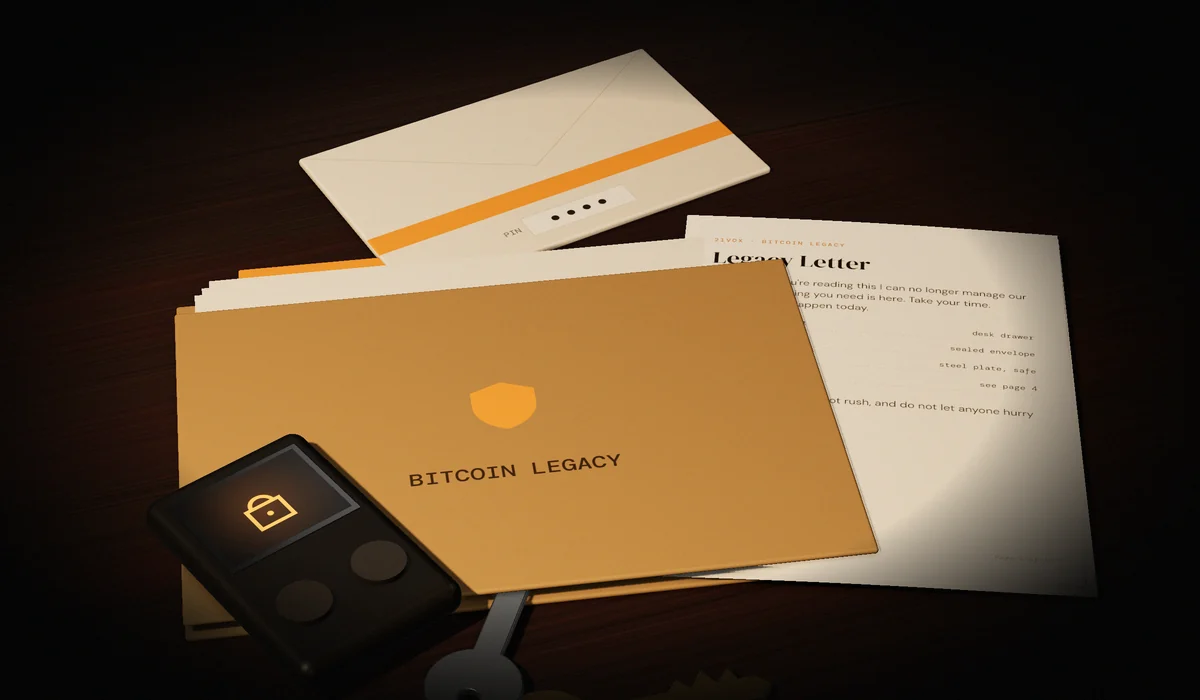
This week's lawsuit rests on one idea: if coins sit still long enough, nobody owns them. For a careful holder, sitting still is the plan. The real risk is a family that doesn't know the coins exist, can't show what you held, and has no idea where to start.
Legacy is the tool we are building for that. Answer a few multiple-choice questions about the wallets, companies and exchanges you use, and it builds a printable kit of five documents. One of them, For the Executor, lists what you held and which companies are involved, with no secrets, so your executor or estate attorney knows what exists. The others give step-by-step instructions for each wallet, a First 48 Hours guide for someone who has never touched Bitcoin, a security checklist, and a page to give your family now. It never asks where anything is kept, or who you are. Names, places and secrets go on by pen after you print.
It runs entirely in your browser. Nothing is stored or sent, and there is no account. Legacy is still in development, and everyone on the waitlist gets founding-member pricing. Prefer paper? A free sample of the paper workbook is on the Legacy page, no email needed.
Join the waitlistBitcoin Weekly is published every week by 21VOX. Written by Karl. No financial advice. Just signal.