Bitcoin Weekly
No. 037
7 min readBy Karl
Trezor Finds Implants, Difficulty Drops 9%, and Bitcoin Falls Below $70K
Trezor confirmed spy implants in three resold hardware wallets, mining difficulty fell 9.13%, and Bitcoin dropped below $70,000 to its lowest level since August.
Trezor Finds Spy Implants in Resold Wallets
On Thursday, November 12, hardware wallet maker Trezor confirmed that three of its Safe 5 wallets had been secretly fitted with an extra circuit board. All three were bought between August 20 and September 23 from CryptoBilis, a reseller in Southeast Asia, either directly or through its online marketplace stores. The added board sits between the wallet's main board and its screen. It can copy what the screen shows, including the recovery phrase displayed when a wallet is set up, and send it to an attacker over a cellular network. Trezor says the implants leave no obvious marks on the outside of the device.
What Trezor did. On November 11 it released firmware 2.13.1, which it says stops the implants found so far from capturing anything. The company is blunt about the limit: "the update can't protect a wallet backup that was captured before it." So anyone who bought a Trezor from CryptoBilis since March 2026 is told to move their bitcoin to a new wallet with a brand new recovery phrase, and can get a free replacement device. Trezor has also cut its reseller network by about 80%. So far it has received no reports of stolen funds, and it has found implants only in Safe 5 wallets from this one reseller. Similar implants were found earlier in Ledger devices sold by the same reseller.
Why this matters even if you never shopped there. A hardware wallet's job is to keep your keys away from anything connected to the internet. That only works if the device you are holding is the one the manufacturer built. Three habits cover most of the risk:
Buy directly from the manufacturer, or from a reseller it lists on its own website. Avoid marketplaces and secondhand devices. Never use a recovery phrase you did not generate yourself on your own device, whether it arrives on a card in the box or anywhere else. And install firmware updates only from the maker's official app. If you bought a wallet from a source you are not sure about, moving to a fresh wallet and a new recovery phrase costs a transaction fee. Losing your cold storage costs everything.
Miners Get a 9% Break
Last week we wrote that when miners unplug, blocks slow down and difficulty falls. This week it happened, faster and bigger than expected. At 12:02 a.m. Eastern on Saturday, November 14, at block 975,744, mining difficulty dropped 9.13%, from 148.36 trillion to 134.82 trillion. It is the largest cut since June 14, when difficulty fell 10.09%. A week ago, mempool.space estimated this adjustment at about 3.7% lower.
What changed. The price. As bitcoin fell from about $75,000 to under $70,000, each machine earned less, and some miners switched off. Network hash rate fell to about 907 exahashes per second from about 1,001 a week earlier, according to mempool.space data compiled by TokenPost, and blocks slowed to roughly 11 minutes apart. The cut means each remaining machine now earns roughly 10% more bitcoin for the same work, according to calculations by The Defiant.
The system working as designed. This is the 12th decrease in 23 adjustments this year, alongside 11 increases. No company, committee or vote decided any of them. Every 2,016 blocks, every node checks how long the last batch took and sets the new difficulty by the same rule. It is one of the quiet reasons Bitcoin keeps running through price crashes. The next adjustment is due around November 29.
Also this week: developers planned to start mining the first block of testnet5, a fresh test network that will replace testnet4, right after this adjustment. Test networks let developers and wallet makers try changes with coins that have no value.
Bitcoin Breaks $70,000
Bitcoin started the week near $75,750 and ended it near $65,200 on Saturday morning, down about 14%. It fell below $72,000 before the US market opened on Thursday, then dropped to about $67,555 around midnight Eastern on Friday, its lowest level since August. A brief bounce above $70,000 after Friday morning's producer price report lasted minutes. Selling resumed Friday evening and again Saturday morning, taking bitcoin to about $65,500 and below Friday's low. Along the way it fell under its 200-week moving average, around $68,000, a long-term trend line many traders watch. More than $1.3 billion in borrowed-money bets were liquidated in 24 hours, and the Fear and Greed Index fell to 20.
What pushed it. Mostly forces outside Bitcoin. On Thursday, Nvidia announced that CEO Jensen Huang had resigned, effective immediately, after weeks of scandal, and named CFO Colette Kress interim CEO. Chip stocks, which bitcoin has been trading alongside, kept falling. The 10-year Treasury yield rose above 5%, the dollar hit a 19-month high, and three Federal Reserve officials spoke in favor of more tightening, leaving a December rate hike fully priced in.
ETF money kept leaving. Spot Bitcoin ETFs lost $828.9 million from Monday to Friday, after $1.28 billion the week before, according to CoinGlass data, and that count is still missing Thursday's figures from the two biggest funds, BlackRock's and Fidelity's. Friday's $185.4 million outflow made it seven losing days in a row, and total assets in the funds fell to $98.05 billion. SoSoValue's tally puts the funds slightly negative for 2026 as a whole.
The bigger picture. Bitcoin is down about 25% for the year, and fell 6.3% in 2025. It has never had two losing years in a row. To avoid that, it would need to finish above about $87,500 on December 31. None of this changes how Bitcoin works: blocks keep coming, and the 21 million limit is the same as it was a week ago. If prices like these make you nervous, it is worth rereading our guide to surviving a bear market.
The Numbers
See them live in Bitcoin Pulse
| BTC Price | ~$65,200 (Sat Nov 14, morning) |
| On the Week | down ~14% |
| From All-Time High | ~48% (peak $126,198) |
| Mining Difficulty | 134.82T (-9.13%, Nov 14) |
| Week's Low | ~$65,200 (Sat Nov 14, lowest since August) |
| Hash Rate | ~907 EH/s (from ~1,001 a week earlier) |
| Year to Date | down about 25% |
| Fear and Greed | 20 (Extreme Fear) |
| Liquidations | more than $1.3B in 24 hours |
| Spot ETF Flows | -$828.9M (Nov 9 to 13) |
| ETF Total Assets | $98.05B (Nov 13) |
| Trezor Firmware | 2.13.1 (blocks known implants) |
| 10-Year Treasury | above 5% |
What to watch next week
- Check where your wallet came from. If you bought a Trezor or Ledger from CryptoBilis or its marketplace stores, move to a new wallet with a new recovery phrase and contact the manufacturer.
- Update old nodes. Bitcoin Core developers disclosed three vulnerabilities, one high severity, fixed in versions 29.2 and 30.0. Every affected version is now end-of-life, so if you run one, upgrade. Lightning developers using LDK got security releases too (0.2.8 and 0.1.14).
- Nvidia earnings. The first report under interim CEO Colette Kress, and a test for the chip stocks bitcoin has been trading with.
- Next difficulty adjustment. Early, unreliable estimates point lower again if hash rate keeps falling.
- The next Fed decision. Markets have fully priced in a rate hike.
- The CLARITY Act deadline. The bill expires when the current Congress ends unless it passes first.
From 21VOX
Live dashboardBitcoin PulseTrack price, sentiment, ETF flows, and network health in one place. No account required.This week's tool
Bitcoin Fear and Greed IndexThe index fell to 20 this week, deep in Extreme Fear. It tracks how the market feels day to day, which is useful mostly as a reminder that feelings swing faster than fundamentals. Check where it stands today.
Bitcoin LegacyIn development
Bitcoin Legacy
If this week's news has you replacing a hardware wallet and moving to a new recovery phrase, there is one more step people forget: the instructions you left your family now point to a wallet you no longer use. An inheritance plan is only as good as its last update.
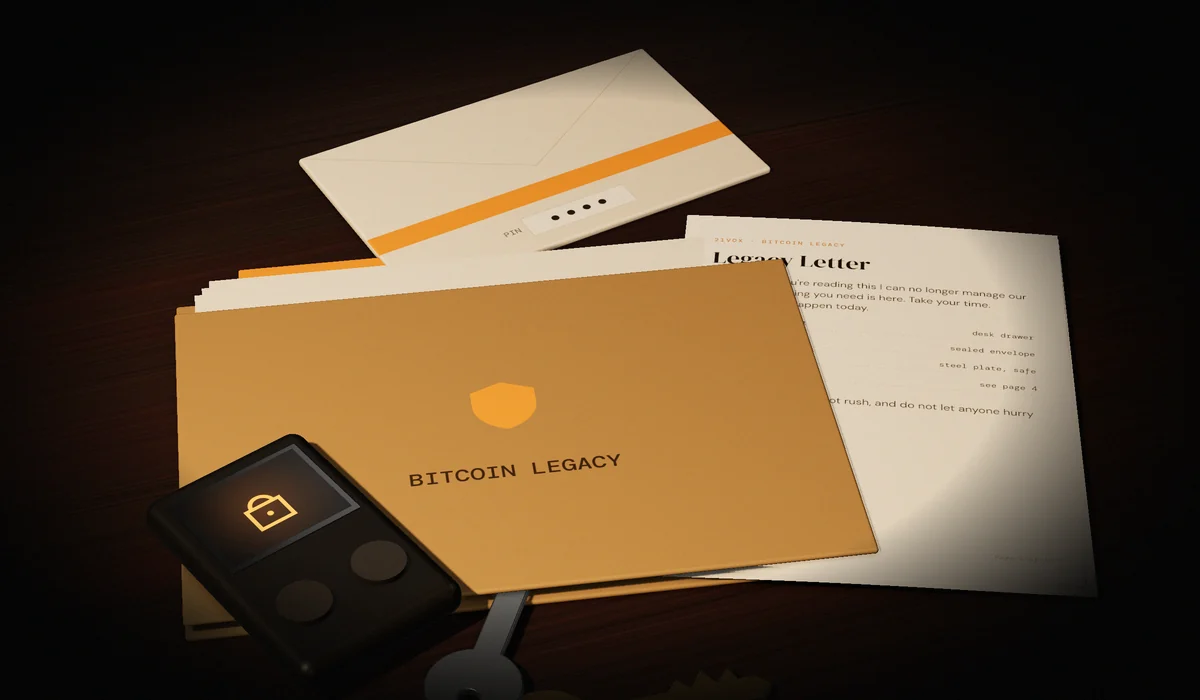
Legacy is the tool we are building for that. Answer a few multiple-choice questions about the wallets, companies and exchanges you use, and it builds a printable kit of five documents, with steps for each company's inheritance process and for what to do if the company is gone. For the Executor lists what you held and which companies are involved, with no secrets. The kit also includes step-by-step instructions for each wallet, a First 48 Hours guide for someone who has never touched Bitcoin, a security checklist, and a page to give your family now. It never asks where anything is kept, or who you are. Names, places and secrets go on by pen after you print. When your setup changes, you build a fresh kit.
It runs entirely in your browser. Nothing is stored or sent, and there is no account. Legacy is still in development, and everyone on the waitlist gets founding-member pricing. Prefer paper? A free sample of the paper workbook is on the Legacy page, no email needed.
Join the waitlistBitcoin Weekly is published every week by 21VOX. Written by Karl. No financial advice. Just signal.